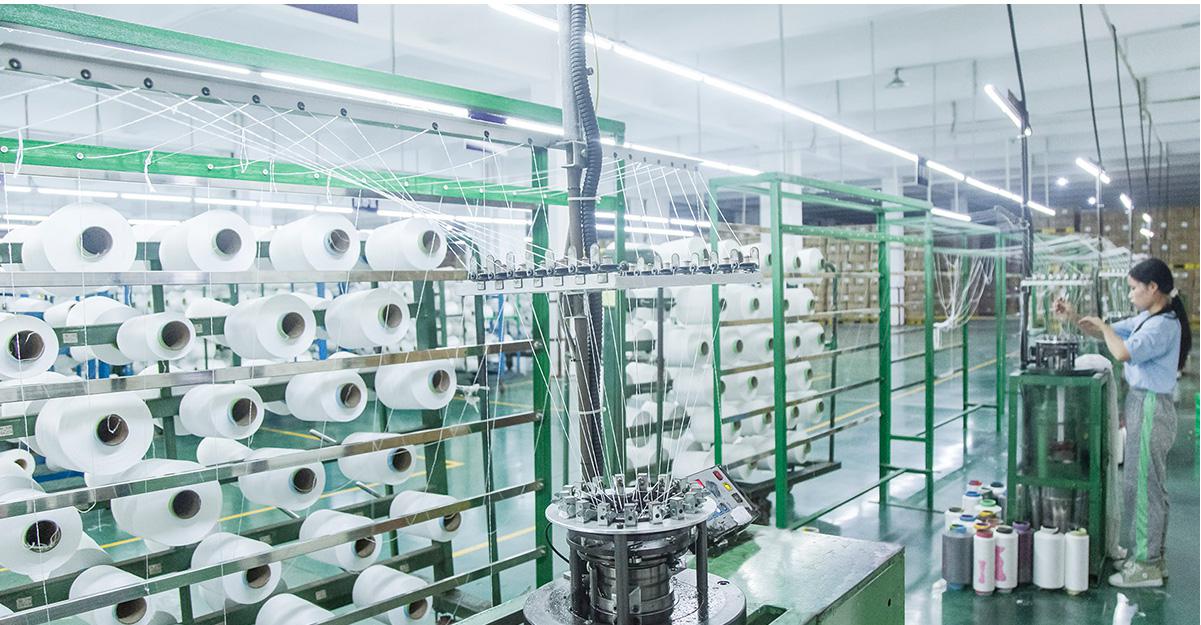
Front shuttle fabrics are basically produced in the form of throwing shuttle by loom. In the production process, the yarn is composed of warp and weft. The weave of woven fabrics generally includes plain weave, twill and satin weave, as well as their changing weave. Classified from the composition, including cotton fabric, silk fabric, wool fabric, hemp fabric, chemical fiber fabric and their blended and interwoven fabrics, etc.
In the current clothing market, the use of woven fabrics is obviously superior to other fabrics in terms of category and production quantity. In fact, the clothes made of this kind of fabric will have many differences because of the differences in style, technology, style and other factors. In addition, there will be great differences in processing flow and process means.
At present, the production process of woven fabrics can be summarized as follows: incoming inspection of flour accessories → technical preparation → cutting → sewing → keyhole nail buckle → ironing → ready to wear inspection → packaging → warehousing or shipment. Generally, the quantity of fabrics shall be counted after entering the site, and the appearance and internal quality of fabrics shall be checked. Only those that meet the production requirements can be put into operation. Before mass production, technical preparation shall be carried out first, including the formulation of process sheet, model and sample clothing production. The sample clothing can enter the next production process after being confirmed by the customer.
Next, the selected woven fabrics will be cut and sewn into finished products or semi-finished products. For example, after some woven fabrics are made into semi-finished products, according to special process requirements, finishing processing must be carried out, such as ready-made clothes washing, ready-made clothes sand washing, wrinkling effect processing, etc. Finally, through the keyhole nail buckle auxiliary process and ironing process, and then packaged and warehoused after passing the inspection.
In the current clothing market, the use of woven fabrics is obviously superior to other fabrics in terms of category and production quantity. In fact, the clothes made of this kind of fabric will have many differences because of the differences in style, technology, style and other factors. In addition, there will be great differences in processing flow and process means.
At present, the production process of woven fabrics can be summarized as follows: incoming inspection of flour accessories → technical preparation → cutting → sewing → keyhole nail buckle → ironing → ready to wear inspection → packaging → warehousing or shipment. Generally, the quantity of fabrics shall be counted after entering the site, and the appearance and internal quality of fabrics shall be checked. Only those that meet the production requirements can be put into operation. Before mass production, technical preparation shall be carried out first, including the formulation of process sheet, model and sample clothing production. The sample clothing can enter the next production process after being confirmed by the customer.
In the processing process, cutting is also a very important link. Generally, when cutting woven fabrics, it is necessary to draw the layout drawing according to the template in advance. "Integrity, rationality and economy" is the basic principle of woven fabric cutting.